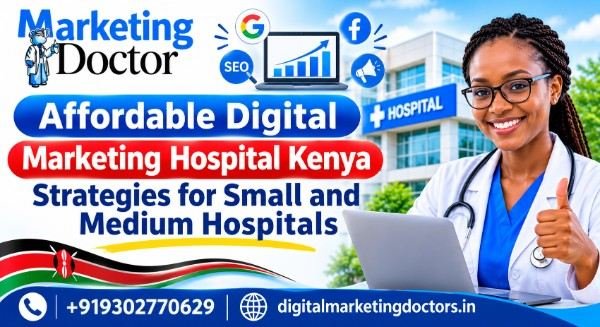
Small and medium hospitals in Kenya need a strong online presence to reach more patients, build trust, and compete with larger healthcare facilities. However, many hospitals have limited marketing budgets and cannot invest heavily in expensive advertising campaigns.
The good news is that effective marketing does not always require a large budget. With the right planning, hospitals can attract local patients, improve their visibility, and build long-term relationships through affordable digital strategies.
A well-planned Digital Marketing Hospital Kenya strategy helps healthcare facilities connect with people searching online for medical services. From Google Business Profile optimization to social media marketing, simple improvements can make a meaningful difference.
Let’s explore some affordable digital marketing strategies that small and medium hospitals can use to improve their online presence.
1. Optimize Your Google Business Profile
Google Business Profile is one of the most affordable ways for hospitals to improve local online visibility. When people search for hospitals, clinics, or medical services nearby, an optimized profile can help them discover your facility.
Hospitals should ensure their profile includes:
- Correct hospital name, address, and contact number.
- Updated opening hours and emergency contact details.
- Complete information about medical departments and specialties.
- High-quality photos of the hospital, facilities, and reception area.
- A working website link and appointment information.
Encourage satisfied patients to share genuine reviews about their experiences. Respond professionally to both positive and negative feedback.
For hospitals working with limited budgets, Digital Marketing Hospital Kenya efforts should begin with these basic local visibility improvements.
2. Create a Simple, Mobile-Friendly Website
A hospital website acts as its digital information centre. Patients often visit a website before deciding where to seek medical care.
A slow, confusing, or outdated website can create a poor impression and make patients choose another facility.
A professional website does not need complicated features or expensive design elements. It should provide essential information in a clear and simple format.
Include important pages such as:
- About the hospital
- Medical departments and specialties
- Doctors and healthcare professionals
- Contact details and location
- Appointment booking information
- Patient resources and frequently asked questions
Make sure the website works smoothly on mobile phones because many people use smartphones to search for healthcare services.
An affordable website with clear navigation, useful information, and a visible appointment option can support a hospital’s long-term growth.
3. Use Social Media to Connect With Patients
Social media platforms such as Facebook and Instagram allow hospitals to communicate with local communities without spending a lot of money.
Instead of posting only promotional messages, share useful and educational content that answers common patient questions.
Hospitals can publish:
- General health awareness tips
- Information about available medical services
- Introductions to doctors and departments
- Hospital events and health campaigns
- Preventive healthcare reminders
- Answers to common health-related questions
For example, a hospital in Nairobi can share posts about routine health check-ups, maternal health awareness, or seasonal health precautions.
Consistent posting helps hospitals stay visible and build familiarity with their audience. A practical Digital Marketing Hospital Kenya plan should focus on helpful communication rather than frequent advertisements.

4. Invest in Local SEO
Search Engine Optimization (SEO) helps a hospital appear in relevant search results when people look for healthcare services online.
Local SEO is particularly valuable for small and medium hospitals because it focuses on reaching patients in specific locations.
Start by identifying search terms that patients may use, such as:
- Hospital in Nairobi
- Children’s hospital in Mombasa
- Maternity hospital in Kisumu
- Dental services in Nakuru
- Emergency medical services near me
Use relevant keywords naturally in website headings, service pages, page titles, and descriptions. Create separate pages for important departments so visitors can easily understand the services offered.
Local SEO takes time, but it can generate sustainable website traffic without requiring continuous advertising expenses.
5. Publish Helpful Healthcare Blogs
Blogging is an affordable way to educate patients and improve a hospital website’s search visibility.
Hospitals can create simple articles based on common health questions and patient concerns.
Useful blog topics include:
- Why regular health check-ups are important
- Common signs that require medical attention
- Benefits of preventive healthcare
- Maternal and child healthcare tips
- When should you consult a specialist?
- How to prepare for a medical appointment
Write in simple language and avoid unnecessary medical terminology. Make sure health information is reviewed by qualified healthcare professionals.
Based on practical experience working with healthcare professionals, informative and patient-friendly content can help hospitals communicate their expertise and build confidence among potential patients.
A consistent Digital Marketing Hospital Kenya content strategy can also help hospitals answer questions that patients are already searching for online.
6. Encourage Genuine Patient Reviews
Online reviews influence how people evaluate healthcare facilities. Before visiting a hospital, many patients check its Google rating and read feedback from other patients.
Hospitals can encourage patients to leave honest reviews after their visits. This can be done through a follow-up message or a simple review link shared with patients.
Remember these important practices:
- Ask for genuine and voluntary feedback.
- Never purchase fake reviews.
- Respond politely to patient concerns.
- Avoid sharing confidential patient information in public replies.
- Use feedback to identify areas that need improvement.
A professional response to negative feedback can demonstrate that the hospital values patient experiences and takes concerns seriously.
7. Use WhatsApp for Patient Communication
WhatsApp is widely used in Kenya and can be a convenient communication channel for hospitals.
Hospitals can use WhatsApp Business to help patients ask general questions, request appointment information, and receive updates.
Useful features include:
- Business profile with contact information
- Quick replies for common questions
- Appointment-related messages
- Business hours and service details
- Greeting and away messages
However, hospitals should protect patient privacy and avoid sharing sensitive medical information through unsecured communication. Follow appropriate consent and data protection practices.
A simple WhatsApp communication process can improve convenience without requiring a large marketing investment.
8. Start Small With Paid Advertising

Paid advertising can help hospitals reach specific audiences, but it is important to control spending.
Instead of running several campaigns at once, begin with a small budget and focus on one service or location.
For example, a hospital may promote its maternity services to people in nearby areas or advertise a specialist consultation service to a relevant local audience.
Before starting an advertising campaign:
- Set a clear objective.
- Choose the right audience and location.
- Use accurate and responsible healthcare messaging.
- Create a clear landing page.
- Track enquiries and campaign performance.
Avoid spending money on advertisements without understanding whether they are generating useful enquiries.
9. Track Results and Improve Your Strategy
Digital marketing should be reviewed regularly. Hospitals do not need expensive analytics tools to begin measuring performance.
Free tools such as Google Analytics and Google Search Console can provide useful information about website visitors, search queries, and page performance.
Track important indicators such as:
- Website visits
- Phone calls and appointment enquiries
- Google Business Profile interactions
- Search visibility
- Social media engagement
- Patient review growth
Reviewing these results helps hospitals understand what is working and where improvements are needed.
A successful Digital Marketing Hospital Kenya approach is not about spending the most money. It is about choosing the right activities, measuring results, and improving consistently.
Conclusion
Small and medium hospitals in Kenya can improve their online presence without investing in expensive marketing campaigns. Optimizing Google Business Profile, building a mobile-friendly website, publishing helpful content, using social media, and improving local SEO are practical ways to reach more patients.
The key is to start with affordable improvements and build a consistent strategy over time. A well-planned Digital Marketing Hospital Kenya approach can help hospitals increase visibility, strengthen patient trust, and create better opportunities for long-term growth.
Frequently Asked Questions (FAQs)
1. What is digital marketing for hospitals?
Digital marketing for hospitals involves using online platforms such as websites, Google, social media, email, and search engines to share healthcare information and connect with potential patients.
2. Which digital marketing strategy is best for small hospitals in Kenya?
Google Business Profile optimization, local SEO, social media marketing, and a mobile-friendly website are excellent starting points for small hospitals with limited budgets.
3. How can hospitals attract more patients online?
Hospitals can improve online visibility through useful website content, local search optimization, genuine patient reviews, social media engagement, and clear appointment information.
4. Is social media marketing affordable for hospitals?
Yes. Hospitals can create and publish educational posts organically at little or no cost. Paid promotions can be introduced later with a controlled budget.
5. Why is local SEO important for hospitals?
Local SEO helps hospitals appear in search results when people look for nearby healthcare services. It makes it easier for local patients to discover relevant facilities.
6. How often should hospitals publish blogs?
Hospitals can start with two to four helpful articles per month. The most important factors are accuracy, relevance, and consistency.
7. Can WhatsApp help hospitals improve patient communication?
Yes. WhatsApp Business can help hospitals respond to general enquiries, share appointment information, and make communication more convenient while protecting patient privacy.
8. How long does digital marketing take to show results?
Some activities, such as paid advertising and profile improvements, may generate early enquiries. SEO and content marketing usually require consistent effort over several months.
9. How can hospitals manage their online reputation?
Hospitals should encourage genuine patient feedback, respond professionally to reviews, address concerns, and continuously improve the patient experience.
10. Do small hospitals need a large digital marketing budget?
No. Small hospitals can begin with basic website improvements, Google Business Profile optimization, local SEO, and organic social media content. They can increase spending as their needs and results grow.